
The short answer
Temple City air conditioners mostly fail from heat-stressed electrical parts, dirty coils, refrigerant leaks and airflow problems after long run times. We measure the system to find the real cause, quote the fix before starting, and carry common parts to finish many repairs on the first visit.
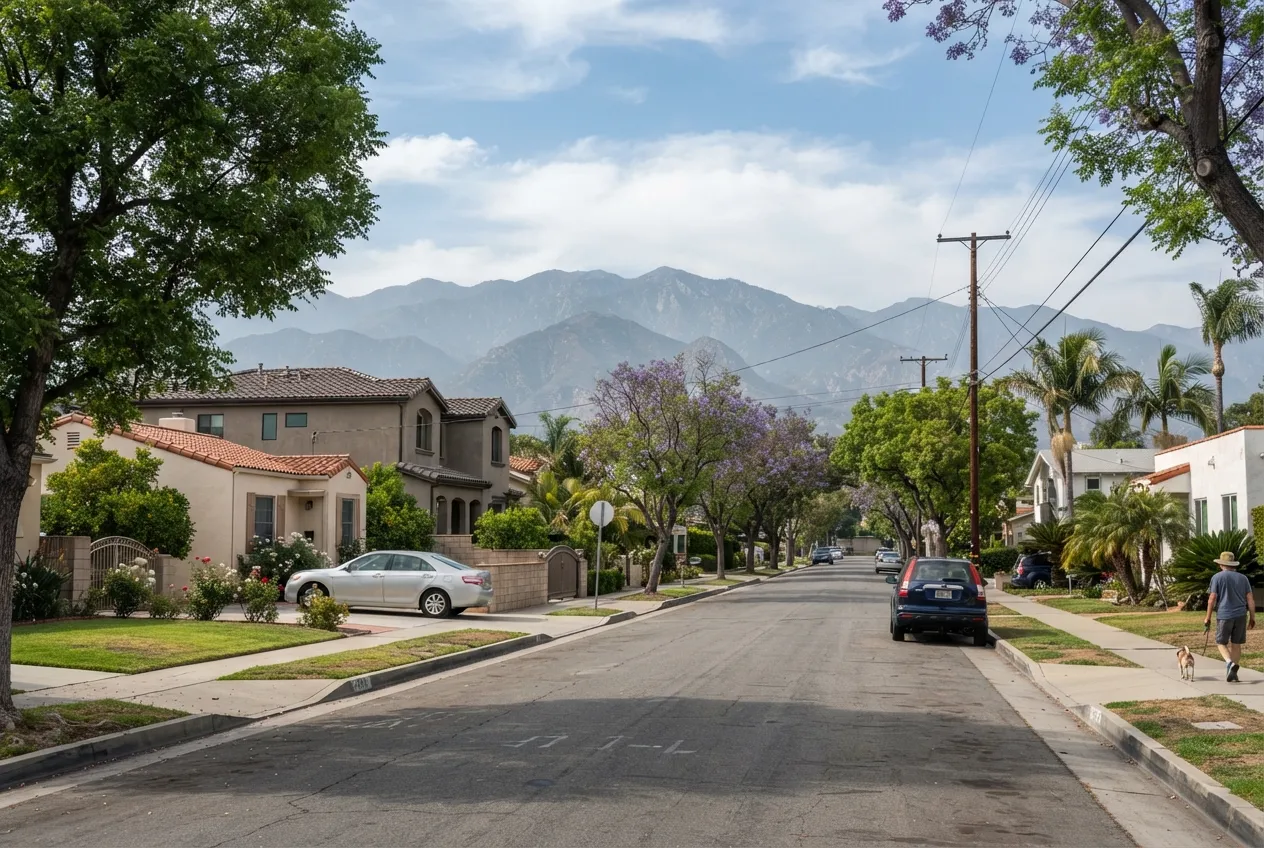
In a San Gabriel Valley town like Temple City, the air conditioner works harder and longer than it does closer to the coast. By late summer, a system in 91780 may have logged weeks of nearly continuous run time, and that is when worn parts finally give out. If your house is warming up and the vents are blowing lukewarm air, our technicians can come over from Pasadena, about five miles northwest, to track down the failure and get the cooling back on.
What long inland summers do to an AC
Every hour an air conditioner runs puts heat and vibration on its components. In hot inland valleys, those hours add up fast. Run capacitors lose capacity in high heat, contactor points pit and burn from constant cycling, and condenser fan motors run hot in direct sun. The outdoor coil gathers dust and lint, which makes the compressor work at higher pressure, which generates more heat, and so on. By the time a Santa Ana spell hits in September or October, a system already near its limit can stop altogether.
Knowing this pattern lets us check the likely suspects first. We still test everything, because the obvious failure is sometimes the result of a second, hidden one.
Our diagnostic checklist
Every AC repair visit in Temple City follows the same set of measurements, so we base the repair on readings rather than hunches.
- Line and control voltage at the condenser and air handler.
- Capacitor readings compared to their rated values.
- Contactor condition and amperage draw on the compressor and fan motor.
- Refrigerant pressures with superheat or subcooling to judge the charge.
- Temperature difference between return air and supply air at the indoor coil.
- Filter condition, blower operation and static pressure in the ducts.
- Condensate drain flow and float switch operation.
- Visible oil spots or corrosion that suggest a refrigerant leak.
Leaks, recharges and older refrigerants
An air conditioner is a sealed system, so low refrigerant always means a leak somewhere. Adding refrigerant without finding that leak gets the house cool for a while, but the problem returns and the cost repeats. When the charge is low, we look for the source: brazed joints, the service valves, the outdoor coil, and the indoor coil, which is a common leak point on older equipment. Once we know where the leak is, we explain whether it can be repaired economically.
Older systems that use a phased-out refrigerant deserve a frank conversation. Recharging them can be expensive, and a major leak on one of these units is often the moment to compare repair and replacement side by side.
When the problem is the house, not the unit
Some Temple City homeowners call because certain rooms never cool, even though the system seems to be running fine. In many single-story homes with ducts in the attic, the cause is airflow: a disconnected run, crushed flex duct, an undersized return, or poor insulation on ducts sitting in a very hot attic. Additions and converted garages that were tied into the original ducts are frequent trouble spots. We check what we can reach during the repair and explain what we find, so you can decide whether to address it.
Water, ice and the indoor side of the system
Not every cooling failure starts outdoors. The evaporator coil above or beside your furnace produces a steady stream of condensate on a humid day, and that water has to leave through a drain line to the outside or to a pump. Algae and sediment build up in those lines over a long season, and when they block, the pan overflows or a float switch shuts the system off to protect the ceiling below. In attic installations, an overflow can stain drywall before anyone notices.
Ice is another indoor warning. A coil that frosts over is usually starved of airflow from a dirty filter, a slow blower or closed registers, though low refrigerant can cause it too. If you see ice on the copper line near the furnace, switch the thermostat to fan only, let it thaw completely, and replace the filter. If the ice comes back after that, the system needs a technician to measure what is going on.
Simple habits that reduce repair calls
Change the filter every one to three months during cooling season, and sooner if wildfire smoke has been in the air. Rinse the outdoor coil gently with a garden hose in spring, spraying from the inside out if you can reach. Keep shrubs and stored items at least a couple of feet from the condenser. A spring tune-up catches weak capacitors and dirty coils before the hottest part of the year. We also repair air conditioning in San Gabriel, Arcadia, El Monte, Rosemead and San Marino.
More services in Temple City
- Heating Repair in Temple City
- Heat Pump Installation in Temple City
- AC Installation in Temple City
- Furnace Repair in Temple City