
The short answer
Call for furnace repair when the unit will not ignite, short cycles, blows cool air, makes new noises, or smells of gas or burning. We test ignition, safety controls, airflow, and venting, then explain whether a repair or replacement makes more sense.
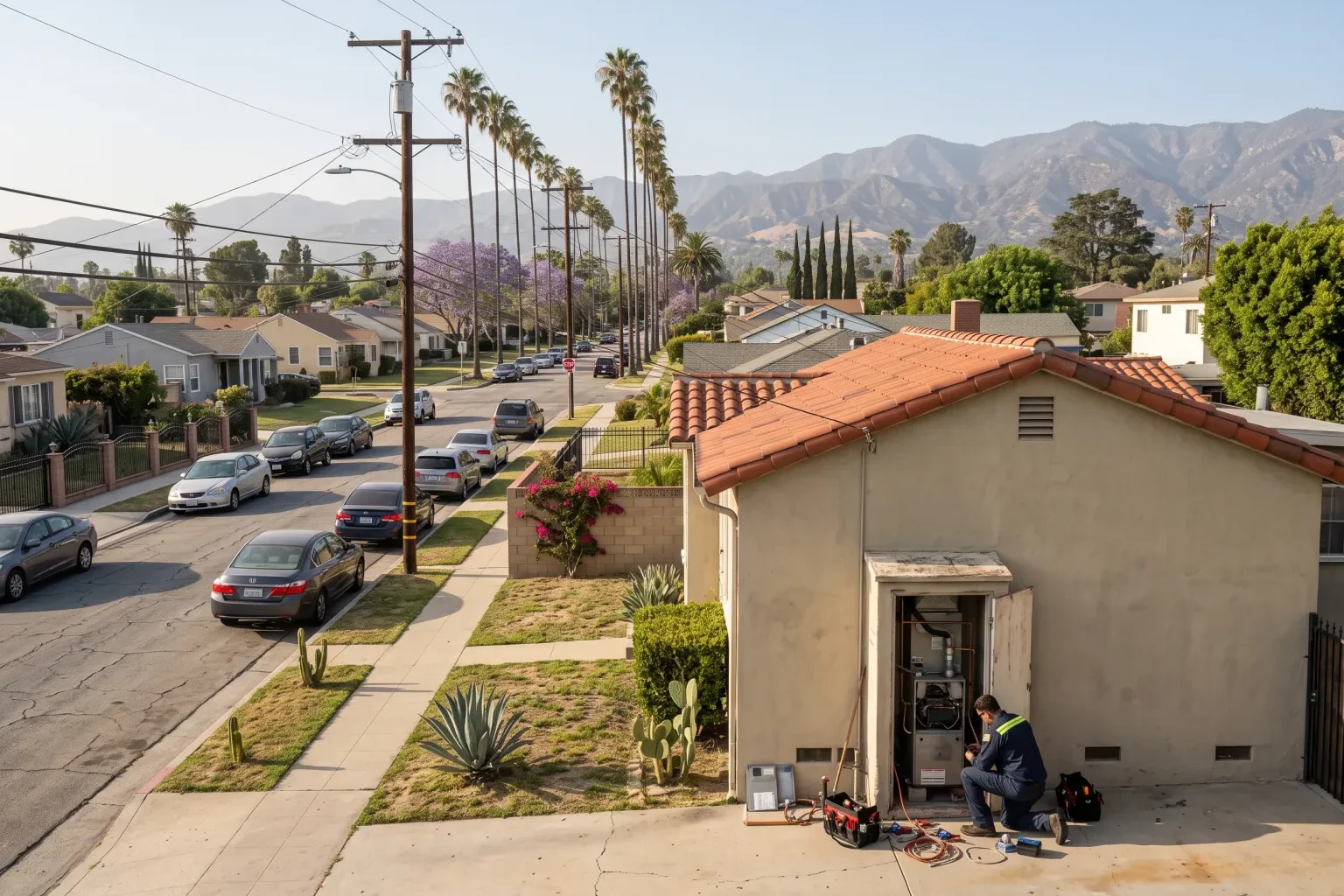
The first chilly night of the season is when most Pasadena homeowners discover their furnace has a problem. It has been sitting unused since spring, dust has settled on the burners, a flame sensor has picked up a coating, or a small part has simply worn out. SummitAir HVAC Contractors diagnoses and repairs gas furnaces across Pasadena and the neighboring communities, from mid-century ranch houses with furnaces in the hall closet to two-story homes with units tucked into the attic. Our goal on a repair call is simple: find the actual cause, explain it in plain language, and fix it safely. Here is how to recognize trouble early, what our technicians test during a diagnostic, how we decide whether a repair is worth it, what influences the cost of fixing a furnace, and what to expect from the moment we arrive.
Symptoms That Point to a Furnace Problem
Some warning signs are obvious, others are easy to dismiss until the heat stops completely. Pay attention to:
- The blower runs but the air from the vents stays cool
- The furnace clicks repeatedly and never lights
- Burners light, then shut off within a minute or two
- A burning dust smell that does not fade after the first hour of use
- Squealing, grinding, or rumbling sounds from the cabinet
- A thermostat that shows a call for heat while nothing happens
- Water pooling near a high-efficiency unit
- Rising gas bills without any change in how you use the heat
If You Smell Gas, Act First
A rotten-egg odor near the furnace or anywhere in the house is not a repair you should wait on. Leave the home, avoid switching lights or appliances on or off, and call your gas utility or emergency services from outside. Once the utility has made the area safe, we can inspect the furnace and gas connections to find and correct the source.
Similarly, if a carbon monoxide alarm sounds, get everyone outside and call for help. Do not restart the furnace until it has been inspected. A cracked heat exchanger or blocked vent can send combustion gases into living space, and that is something a technician needs to confirm in person.
What a Furnace Diagnostic Covers
Guessing at parts wastes your time and money, so our technicians follow a methodical check. We begin at the thermostat, confirming it is calling for heat and that the wiring and batteries are sound. At the furnace, we watch a full startup sequence: inducer motor, pressure switch, igniter, gas valve, flame proving, and blower.
From there we test the components that commonly fail. Flame sensors get dirty and cause short cycling. Hot surface igniters crack. Pressure switches stick or their tubing clogs. Limit switches trip when airflow is restricted by a clogged filter or closed registers. Control boards can fail or show error codes that point to a specific fault.
We also inspect the burners, check the heat exchanger for visible cracks or corrosion, and look at the flue and vent path for blockages or separation. In attics, we check that the vent connector is secure and that nothing has shifted. Each finding is explained to you before any part is replaced.
Deciding Between Repair and Replacement
Most furnace problems are fixable. A sensor, igniter, capacitor, or blower motor can often restore normal operation without replacing the system. We recommend repair when the rest of the furnace is in reasonable shape and the fix addresses the root cause.
Replacement enters the conversation when a heat exchanger is cracked, when the same failures keep coming back, or when parts are no longer available. If you do look at a new unit, keep in mind that South Coast AQMD Rule 1111 limits NOx emissions from natural-gas central furnaces sold and installed in the Los Angeles region, and the district has been amending it toward zero-emission requirements. Since the district revises compliance dates, it is worth checking the current rule before you commit. We explain your options either way and never push a replacement when a repair will do.
What Influences the Cost of a Furnace Repair
Repair cost depends on what has failed and how hard it is to reach. The main factors are:
- Which part needs replacing, from a small sensor to a blower motor or control board
- Whether the part is common or specific to your furnace brand and model
- Access to the unit, such as a cramped attic or a narrow closet
- Additional issues found during the diagnostic, like a clogged condensate trap or damaged venting
- Timing, if the visit falls outside regular business hours
How a Repair Visit Unfolds
When you book, we ask a few questions about what the furnace is doing, where it is located, and anything you have noticed. Our technician arrives, confirms the symptoms with you, and starts the diagnostic.
Once the cause is clear, you get a straightforward explanation and the repair options. With your approval, we complete the work, often on the same visit when the part is on hand. Afterward we run the furnace through several heating cycles, check the temperature rise, and make sure the safety controls respond correctly.
Before leaving, we share any other items we noticed, such as a filter that needs changing or a duct joint that is loose, so you can plan ahead without surprises.
Furnace Repair by city
- Furnace Repair in San Marino
- Furnace Repair in South Pasadena
- Furnace Repair in San Gabriel
- Furnace Repair in Alhambra
- Furnace Repair in Sierra Madre
- Furnace Repair in Temple City
- Furnace Repair in Arcadia
- Furnace Repair in Rosemead
- Furnace Repair in La Cañada Flintridge
- Furnace Repair in Monterey Park
- Furnace Repair in Glendale
- Furnace Repair in El Monte