
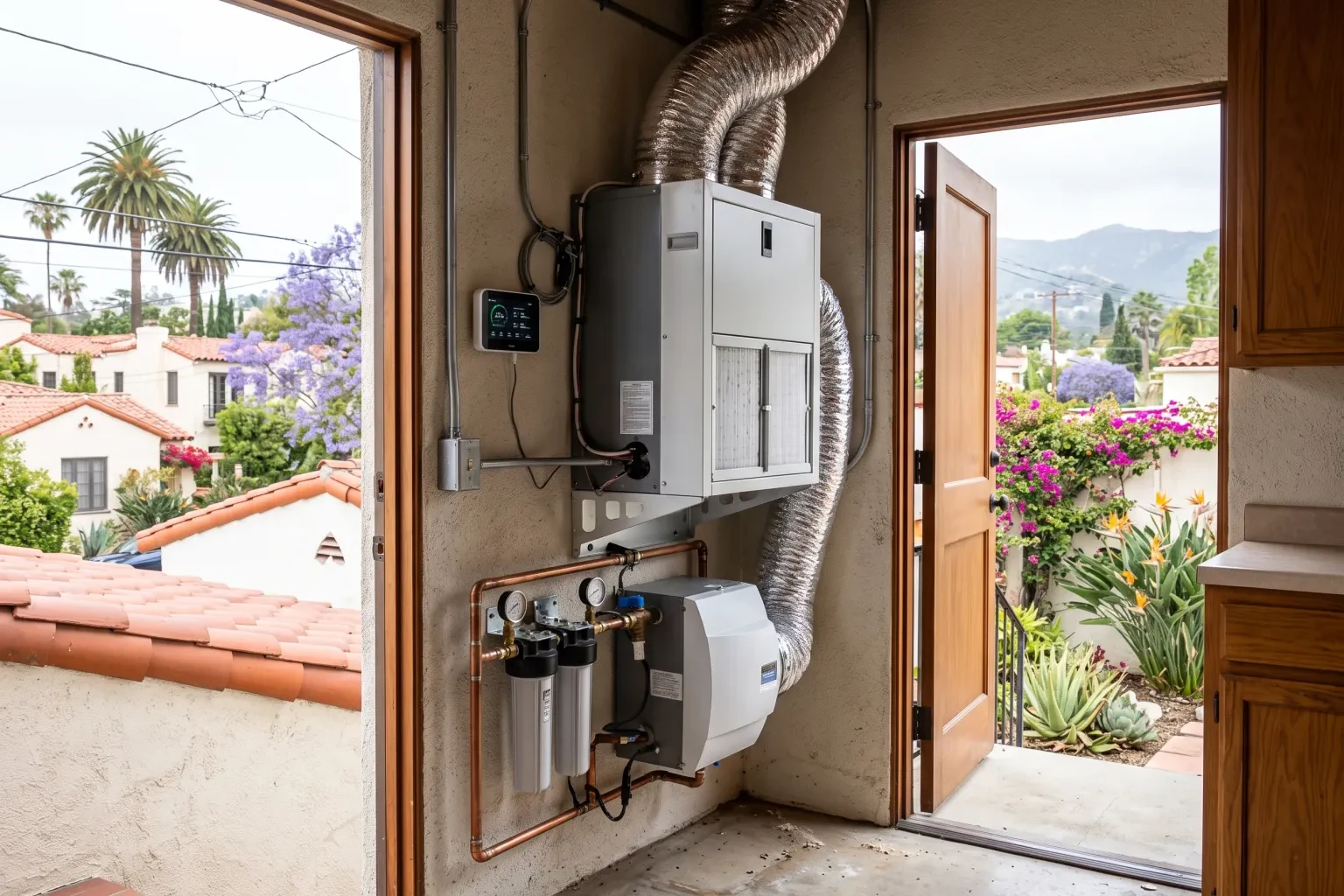
The short answer
If your home stays dusty, smells stale, or fills with smoke odor during fire season, the HVAC system can help. We inspect filtration, ducts, and airflow, then recommend practical upgrades such as better filters, duct sealing, or air cleaners.
The air inside a home often carries more dust, pollen, and odors than people expect, and in the Pasadena area there are a few local reasons for that. Dry summers keep fine dust in motion, fall Santa Ana winds can sweep debris and pollen across the foothills, and wildfire smoke drifts into the valley during fire season. Older houses add their own factors: ducts running through dusty attics, gaps around return grilles, and filter racks that were designed for thin, low-grade filters. SummitAir HVAC Contractors helps homeowners improve indoor air through the heating and cooling system they already have, along with add-on equipment when it is warranted. This page covers the signs that point to an air quality problem, how we evaluate your home and system, when to repair existing equipment and when to replace it, what affects the cost of improvements, and what an air quality visit looks like.
Signs the Air in Your Home Needs Help
Air quality problems are usually noticed through comfort and cleaning habits rather than any single dramatic event. Common clues include:
- Dust settling on surfaces within a day or two of cleaning
- Allergy symptoms that ease when you leave the house
- A musty or stale smell when the system starts up
- Smoke odor lingering indoors long after outdoor air has cleared
- Visible dirt streaks around supply registers or return grilles
- Rooms that feel stuffy even when the temperature is comfortable
- A filter that clogs much faster than expected
How We Evaluate Air Quality Through Your HVAC System
Your heating and cooling system circulates the air in your home many times a day, so it is the logical starting point. We look first at filtration: the filter size and rating, how well it fits in the rack, and whether air is bypassing it through gaps. A high-rated filter does little good if dirty air slips around the edges.
Next, we inspect the return side. In many older Pasadena homes, returns are undersized or leak, pulling in attic or crawlspace air that carries insulation fibers and dust. We look at visible duct sections for disconnected joints, tears, and signs of debris buildup.
We also check the indoor coil and blower wheel, since a dirty coil can harbor mold and a caked blower spreads dust. Airflow measurements tell us whether the system can handle a thicker filter or an added air cleaner without straining. For ductless systems, we inspect the indoor heads for buildup on the coil and fan.
Finally, we talk about how you live: pets, smoking, cooking habits, hobbies, and whether anyone in the home is sensitive to smoke or allergens. That shapes which improvements make sense.
Repair, Upgrade, or Replace
Not every air quality concern requires new equipment. Often the first steps are repairs: sealing a leaking return, fixing a filter rack so the filter fits tightly, cleaning a dirty coil, or reconnecting a duct that has come loose in the attic.
When those basics are in place, upgrades can add a further layer. Options include a deeper media filter cabinet, a whole-home air cleaner, or ventilation improvements. During wildfire smoke events, a well-sealed system with good filtration and the fan running can help reduce indoor particles, and we can explain how to set the thermostat for that situation.
Replacement comes up when ducts are badly deteriorated or contaminated, or when the system itself cannot move enough air to support better filtration. If a new heat pump becomes part of the plan, rebate options depend on whether LADWP or Southern California Edison serves your address, and we confirm the current offer before quoting it.
Smoke Season and Everyday Habits That Help
Equipment is only part of the picture. How a household runs the system during poor outdoor air days, and how it handles routine upkeep, has a real effect on what everyone breathes.
When wildfire smoke is in the area, close windows and doors and switch the thermostat fan from auto to on so air keeps passing through the filter even when the system is not heating or cooling. Check the filter after a smoky stretch, because it can load up quickly and restrict airflow. If you rely on window or wall units in some rooms, set them to recirculate rather than draw in outside air.
Day to day, a few habits keep the system from spreading dust: change filters on schedule, vacuum return grilles, and keep stored boxes and clutter away from the air handler closet or furnace platform so the return does not pull in debris. Run kitchen and bathroom exhaust fans when cooking or showering to move moisture and odors outside instead of into the ductwork.
If someone in the home has asthma or other breathing concerns, mention it during the visit so we can weigh filtration choices with that in mind.
What Affects the Cost of Air Quality Improvements
The scope of work depends on what we find and what you want to achieve. The main factors are:
- Type of solution, from a filter rack fix to a full media cabinet or air cleaner
- Amount of duct sealing, repair, or replacement needed
- Access to the air handler and ductwork in attics or crawlspaces
- Whether electrical work is required for powered equipment
- Cleaning of coils, blower wheels, or ductless indoor units
- Ongoing filter or media replacement needs
What to Expect From an Air Quality Visit
We start by listening to your concerns and asking about when the problem is worst, for example during fire season, after cleaning, or when the system first turns on. The technician then inspects the filter, returns, visible ducts, and indoor equipment, and takes airflow readings.
You receive a clear explanation of what is contributing to the issue and a prioritized list of options, starting with the most direct fixes. Many simple improvements, like correcting a filter fit or sealing an obvious return leak, can be handled during the same visit.
For larger upgrades, we schedule the work, install and test the equipment, and show you how to maintain it, including when and how to change filters or media.