
The short answer
A ductless mini-split is a good fit when one room or zone runs too hot or too cold, when a home has no ducts, or when an older ductless unit keeps failing. We size each indoor head to the room, plan the line set and electrical route, and walk you through options before any work starts.
A ductless mini-split puts heating and cooling right into the room that needs it, with no duct run through the attic or crawlspace. For a lot of Pasadena-area houses that is a practical fix: a converted garage that bakes every afternoon, a back bedroom the central system never quite reaches, a 1920s bungalow that was never built for ducts, or a condo where running new ductwork is simply not allowed. SummitAir HVAC Contractors plans and installs these systems for homeowners across the San Gabriel Valley and the foothill cities around it. This page explains how to tell if a mini-split suits your home, what our technicians look at before recommending one, how we approach an older ductless unit that has stopped performing, which factors shape the cost of a project, and what to expect on the day we visit.
Signs a Mini-Split Makes Sense for Your Home
Mini-splits solve specific problems well. They are rarely the answer for every house, so it helps to know the situations where they shine. Inland neighborhoods around Pasadena run much hotter in summer than areas near the coast, and fall Santa Ana winds can push dry heat for days. Rooms on the west side, upstairs spaces under a low roof, and additions with thin insulation feel that heat first.
If any of the following sound familiar, a ductless system is worth a conversation:
- A room addition, sunroom, or garage conversion that was never tied into the main system
- An older home with plaster walls and no attic space for ducts
- One floor that stays several degrees warmer than the rest of the house
- Window units or portable coolers that are loud, drip, or block light and views
- A home office or nursery where you want separate temperature control
- An existing ductless unit that blows weak air, ices up, or leaks water indoors
What Our Technicians Check Before Recommending Equipment
A mini-split has to be matched to the space. Oversizing one creates short cycles and clammy rooms, while undersizing leaves the unit running hard on the hottest days. Before we suggest anything, we look at how each room is actually used and how it gains or loses heat.
We note the square footage and ceiling height, window size and direction, insulation where we can see it, and how many people use the room. We also look at where an indoor head can mount so the airflow reaches the seating or sleeping area rather than blowing straight at a wall or a doorway.
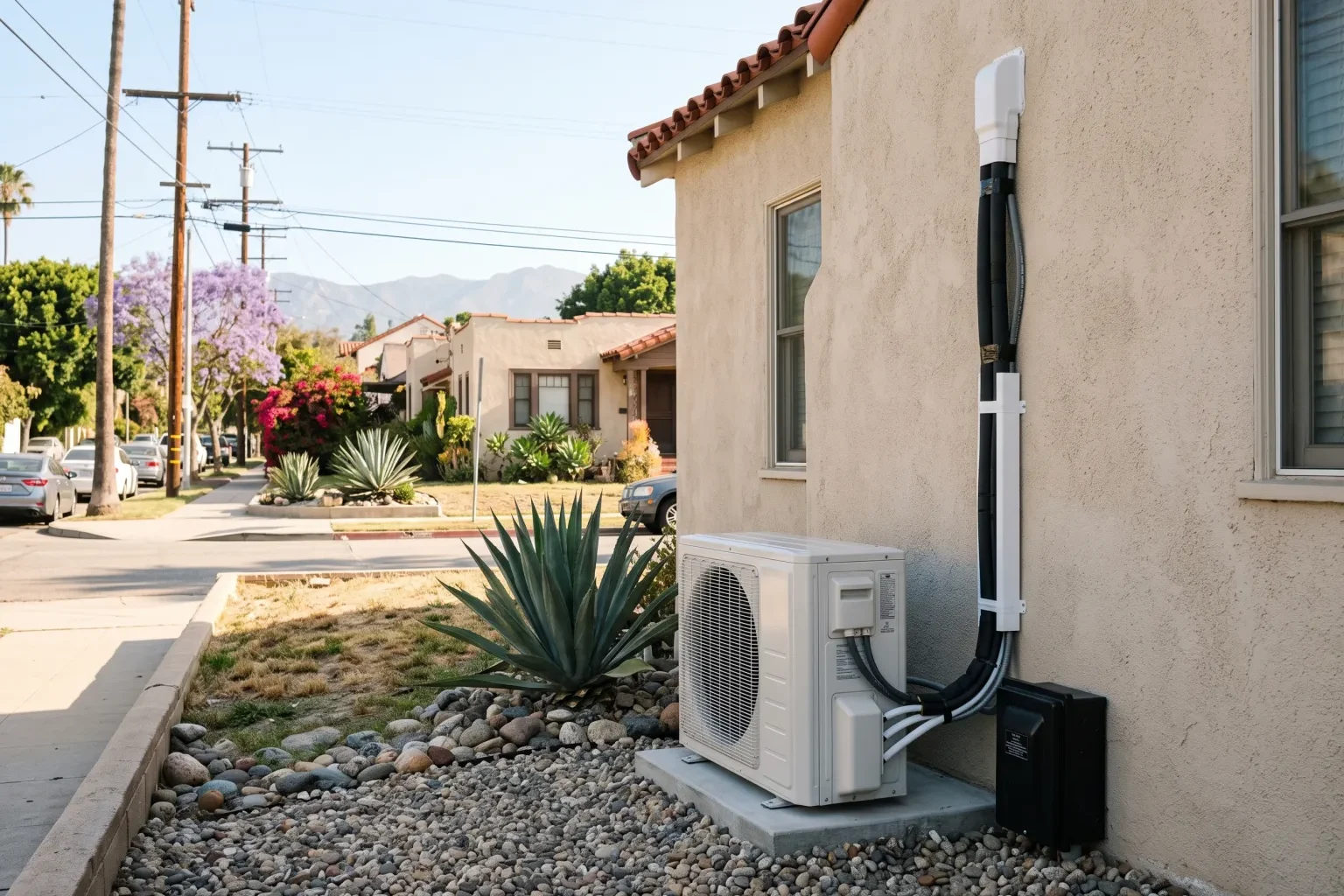
On the outdoor side, we look for a stable, level spot for the condenser with room for airflow and service, and we check how far the refrigerant line set must travel. Electrical capacity matters too: we review the panel to see whether there is space for a new dedicated circuit or whether upgrades are needed. For condos and townhomes, we ask about HOA rules on where outdoor equipment and line covers may go.
Repair or Replace an Existing Ductless System
Some homeowners call us about a mini-split that is already on the wall. In that case we start by finding out why it is struggling. Dirty filters and coils, a clogged condensate line, a failing fan motor, a weak capacitor, or a refrigerant leak at a flare fitting can all cause poor performance, and many of these are repairable.
Replacement starts to make more sense when the unit uses an older refrigerant that is getting harder to service, when the compressor has failed, when repairs keep repeating, or when the system simply never fit the room. We lay out what each path involves so you can weigh a repair against new equipment with clear information instead of guesswork.
If your home is served by LADWP, residential electric customers can apply for Consumer Rebate Program rebates on qualifying heat pump HVAC systems, and ductless heat pumps can fall into that group depending on their SEER2 and HSPF2 ratings. The application is filed after the equipment is purchased and installed, within 12 months of purchase. Many homes outside the City of Los Angeles are served by Southern California Edison instead, so the rebate picture depends on which utility serves your address. We confirm the current offer before we mention it in a quote.
What Affects the Cost of a Mini-Split Project
No two ductless jobs are priced the same, because the layout of the house drives most of the labor. The main variables are:
- How many indoor heads you need and whether they share one outdoor unit or use separate ones
- Indoor unit style, such as wall-mounted, ceiling cassette, or slim ducted air handler
- Length and route of the line set, including any runs through attics, walls, or exterior chases
- Electrical work, such as a new breaker, disconnect, or panel upgrade
- Mounting needs for the condenser, like a pad, wall bracket, or roof stand
- Efficiency level of the equipment and any heating capacity requirements
- Permit requirements set by your city
How an Installation Visit Works
The process begins with an in-home assessment. A technician walks the rooms you want to condition, takes measurements, and talks through how you use each space. You get a written proposal that spells out the equipment, the locations of indoor and outdoor units, and the scope of electrical and finishing work.
On install day, the crew protects floors and furniture near the work area, mounts the indoor bracket, and drills a small opening through the wall for the line set, drain, and control wiring. The outdoor unit is set and leveled, the line set is connected, and the system is pressure-tested and evacuated before refrigerant is released. We then power everything up, check airflow and temperatures, and confirm the condensate drains properly.
Before we leave, we show you how to use the remote or app, how to clean the washable filters, and what a normal sound or drip looks like versus something that needs a call. Most single-zone projects are finished in one visit, while multi-zone systems can take longer depending on the routing.