
The short answer
A new AC makes sense when your current one is failing repeatedly, uses an outdated refrigerant, or cannot keep the house comfortable. We size the system to your home, inspect ducts and electrical service, and explain equipment options and any utility incentives that apply to your address.
Putting in a new cooling system is one of the larger decisions a homeowner makes about a house, and the equipment is only part of it. Sizing, duct condition, electrical capacity, where the condenser sits and which utility serves the address all shape how well the finished system performs. SummitAir HVAC Contractors installs central air conditioners, heat pumps and ductless mini-splits for houses, condos and townhomes in Pasadena, San Marino, South Pasadena, Sierra Madre, La Cañada Flintridge, Arcadia, Alhambra and the surrounding area. Below you will find the signals that a replacement is due, the survey we perform before recommending anything, the choices you will face, the factors that move the cost, and the steps from first visit to finished startup.
Signals that it may be time for a new system
Some homeowners call because the old unit finally stopped. Others notice a slow decline over a few hot seasons. Either way, these patterns suggest installation is worth discussing:
- Repairs have become a yearly event, and the latest quote involves the compressor or outdoor coil
- The system uses an older refrigerant that is increasingly expensive to service
- Upstairs bedrooms or a converted garage never reach the thermostat setting on hot afternoons
- Utility bills keep climbing even though your habits have not changed
- The home was remodeled or expanded and the original equipment was never resized
- You want to add cooling to a house that has only ever had a wall furnace or no central system
- You are planning a gas furnace replacement and want to consider a heat pump that heats and cools
The survey we do before recommending equipment
A replacement that simply matches the old unit's tonnage can repeat the old unit's mistakes. Our assessment looks at the house itself: square footage, ceiling heights, window orientation, insulation levels and how much afternoon sun the walls and roof take. Homes in hotter inland pockets, or those with west-facing glass, often need a different approach than a shaded house in a cooler canyon.
Ducts get a close look, because a high-efficiency condenser connected to leaky, undersized or sun-baked attic ductwork will never deliver what it promises. We check return air sizing, measure static pressure where practical, and note crushed or disconnected runs. The electrical panel, the disconnect at the condenser and the breaker size are confirmed too, along with the condensate drain route and the clearances around the outdoor pad.
For condos and townhomes, we also ask about rooftop access, association rules on where equipment can be placed, and noise concerns from neighbors close by.
Choosing between your installation options
Depending on the home, there are usually a few reasonable paths, and we explain each one with its trade-offs:
- Like-for-like replacement of the condenser and indoor coil, matched to the existing furnace
- A full split system with a new air handler or furnace, which often improves airflow and efficiency
- A heat pump in place of a traditional AC, adding efficient electric heating to the same equipment
- Ductless mini-splits for additions, garages or older homes where running new ducts is impractical
- Duct repair or partial replacement alongside the new equipment when the existing runs are failing
Rules and incentives that can affect your plan
If a new furnace is part of the project, South Coast AQMD Rule 1111 applies. It limits NOx emissions from gas fan-type central furnaces sold and installed in the region and has been amended toward zero-emission requirements, so we check current compliance dates before quoting a gas furnace.
Heat pump incentives depend on your utility. LADWP residential customers can apply for Consumer Rebate Program rebates on qualifying heat pump systems, with the amount tied to the unit's SEER2 and HSPF2 ratings, and the application is filed after purchase and installation, within 12 months. Many communities outside the City of Los Angeles are served by Southern California Edison instead, so we confirm the current offer for your address. The federal 25C credit covered heat pumps placed in service before December 31, 2025, and does not apply to new installations.
What shapes the cost, and how installation day goes
Your quote reflects the equipment type and efficiency rating, the system's capacity, whether ducts need repair or replacement, electrical upgrades, line set length, access to attics or rooftops, and any permits the work requires. We itemize the scope so you can see what is included and compare options fairly.
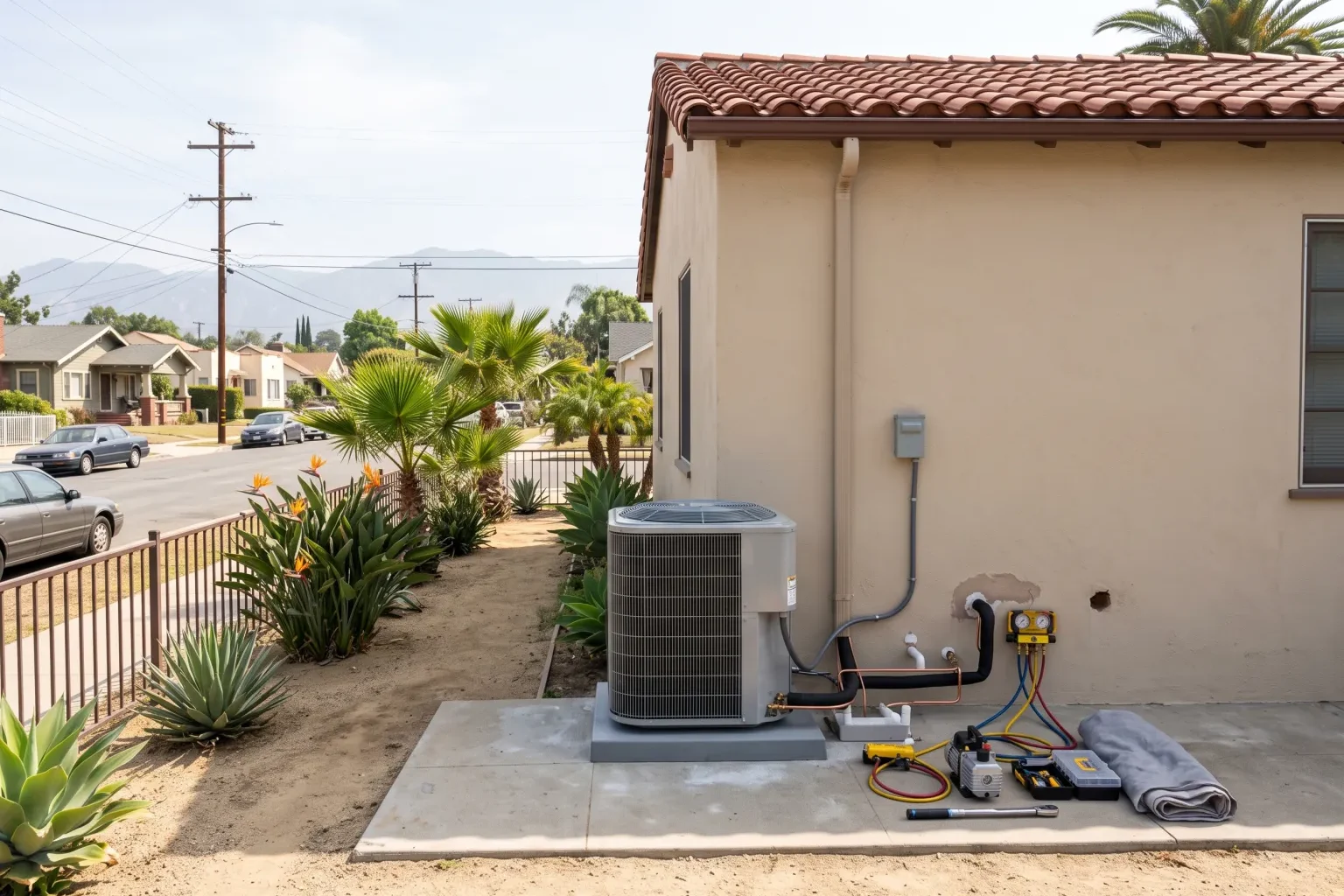
Once you choose a system, we schedule the work and arrange required permits. On installation day the crew protects floors and work areas, removes the old equipment, sets the new condenser and indoor components, installs or reuses line sets as appropriate, and pressure-tests and evacuates the refrigerant circuit before charging. Wiring, drains and the thermostat are connected and checked.
At startup, the technician measures refrigerant performance, airflow and temperature split, confirms the drain is flowing, and walks you through thermostat settings and filter changes. If a heat pump rebate applies, we point out the paperwork you will need to file.
Keeping a new system healthy through long, dry summers
A fresh installation still depends on a little care to stay efficient. Southern California's dry season means outdoor coils collect fine dust, pollen and, during fall wind events, leaves and ash. Keeping shrubs and stored items a couple of feet back from the condenser lets it breathe, and an occasional gentle rinse of the fins with a garden hose, with the power off, keeps heat transfer strong.
Indoors, the filter is the simplest lever you control. During smoky stretches it may load up in weeks rather than months, and a clogged filter starves the coil of air, which can lead to icing and higher bills. We will show you where the filter lives, what size and rating your blower can handle, and how to tell when it needs changing.
Plan on a yearly tune-up before the heat arrives. That visit gives a technician a chance to clean the coil, clear the drain line, check electrical connections and confirm the refrigerant readings still match what was recorded at startup, so small issues are caught while they are still small.
AC Installation by city
- AC Installation in San Marino
- AC Installation in South Pasadena
- AC Installation in San Gabriel
- AC Installation in Alhambra
- AC Installation in Sierra Madre
- AC Installation in Temple City
- AC Installation in Arcadia
- AC Installation in Rosemead
- AC Installation in La Cañada Flintridge
- AC Installation in Monterey Park
- AC Installation in Glendale
- AC Installation in El Monte