
The short answer
Schedule HVAC maintenance once before summer and once before winter, or sooner if airflow drops, noise increases, or bills climb. Each visit includes cleaning, electrical and refrigerant checks, safety testing, and a written list of anything that needs follow-up.
Heating and cooling equipment in the Pasadena area works on an uneven schedule. Air conditioners carry long stretches of summer heat and the dry spells that Santa Ana winds can bring into fall, while furnaces and heat pumps may sit nearly idle until a sudden cold week. Systems used that way benefit from a regular checkup timed before each demanding season. SummitAir HVAC Contractors offers maintenance visits for central air conditioners, gas furnaces, heat pumps, and ductless systems in homes and condos throughout Pasadena and the communities nearby. A tune-up is not a sales call. It is a careful look at the parts that wear, clog, and loosen over time, along with cleaning and adjustments that help the equipment run the way it was designed to. Below you will find the signals that a system is overdue, a detailed list of what we inspect, how maintenance findings feed into repair or replacement decisions, what affects the cost of service, and how a visit is organized.
Clues That Your System Is Overdue for Service
Many homeowners only think about maintenance after a breakdown. These are earlier hints that the equipment would benefit from a visit now:
- Weaker airflow from the registers than you remember
- Rooms that take longer to cool down on hot afternoons
- New rattles, hums, or clicks from the indoor or outdoor unit
- Dust building up quickly on furniture after cleaning
- Water around the indoor unit or a drain line that drips constantly
- Energy bills that rise even though your habits have not changed
- A filter you cannot remember changing
Our Maintenance Checklist
The exact tasks depend on the equipment, but a typical visit covers both the cooling and heating sides of the system.
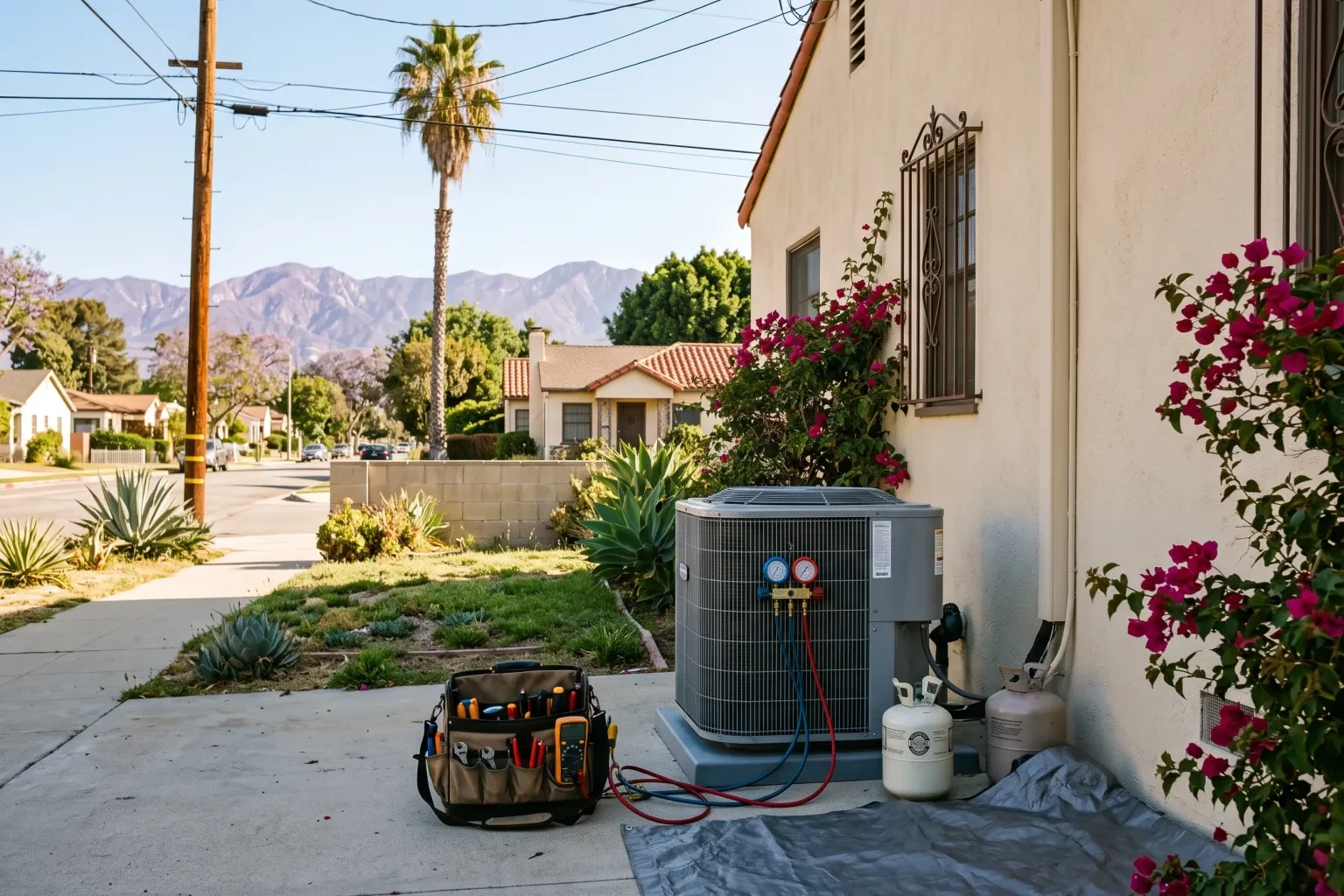
On the cooling side, we clean or rinse the outdoor condenser coil, which collects dust, leaves, and pollen, and we straighten bent fins. We check refrigerant pressures and temperature split, test the capacitor and contactor, look at the fan motor and blades, and clear the condensate drain so it does not back up into the ceiling or closet.
On the heating side, we inspect the burners and flame, clean the flame sensor, test the igniter, and check the heat exchanger for visible cracks or rust. Venting is inspected for proper connection and slope. Heat pumps get a check of the reversing valve and defrost controls.
Across the whole system, we tighten electrical connections, check blower operation and belt condition where applicable, measure airflow, review thermostat settings, and replace or recommend a filter. For homes with ducts in the attic, we look at the visible ductwork for disconnected joints or crushed runs.
When a Tune-Up Turns Up Bigger Problems
Sometimes maintenance uncovers wear that cleaning cannot fix, such as a capacitor that is out of specification, a blower motor drawing too much current, or a slow refrigerant leak. In those cases we explain what we found, how urgent it is, and what the repair involves. You decide whether to handle it now or plan for it later.
If the system is older and has a list of growing issues, we can talk through replacement as well. A furnace decision should account for South Coast AQMD Rule 1111, which limits NOx emissions from natural-gas central furnaces sold and installed in the Los Angeles region and has been amended toward zero-emission requirements; the district revises its compliance dates, so the current rule needs checking. A heat pump may be eligible for rebates depending on whether your home is served by LADWP or Southern California Edison, and we verify the current offer before mentioning it.
Simple Habits Between Professional Visits
A seasonal tune-up covers the technical work, but a few small routines at home make a noticeable difference in how the equipment holds up through a long, dry summer and the occasional cold snap.
Keep the area around the outdoor condenser clear. Trim shrubs back a couple of feet, rake away leaves after windy days, and avoid stacking garden tools or trash bins against the cabinet, since the unit needs open space to release heat. After a Santa Ana wind event, take a quick look for debris caught in the fins or on top of the fan grille.
Indoors, keep supply registers and return grilles open and unblocked by furniture or rugs. Closing vents in unused rooms can raise pressure in the ducts and reduce efficiency rather than save energy. If your system has a condensate line that exits near a wall or a drain, glance at it occasionally during the cooling months to confirm water is flowing and not backing up.
Finally, pay attention to the thermostat. Replace its batteries when prompted, and if you use a programmable or smart model, review the schedule as the seasons change so the system is not working against you.
What Affects the Cost of Maintenance
Maintenance pricing depends on the scope of the visit:
- How many systems or zones are serviced, such as a furnace plus an AC or several ductless heads
- Equipment type and how accessible it is, especially in attics or tight closets
- Whether you choose a one-time tune-up or an ongoing maintenance plan
- Filters or small parts replaced during the visit
- Extra cleaning needed for heavily soiled coils or drain lines
How a Maintenance Visit Is Organized
We suggest booking cooling maintenance in spring, ahead of the hottest months, and heating maintenance in early fall. When you schedule, let us know what equipment you have and anything that has seemed off.
On arrival, the technician asks a few questions, then works through the checklist for each piece of equipment. Most visits for a single system take about an hour or two, depending on condition and access.
At the end, you get a summary of what was cleaned and adjusted, measurements that were taken, and any items that need attention, ranked by priority. Keeping a copy of these notes from year to year makes it easier to spot gradual changes and plan for future work on your own timeline.