
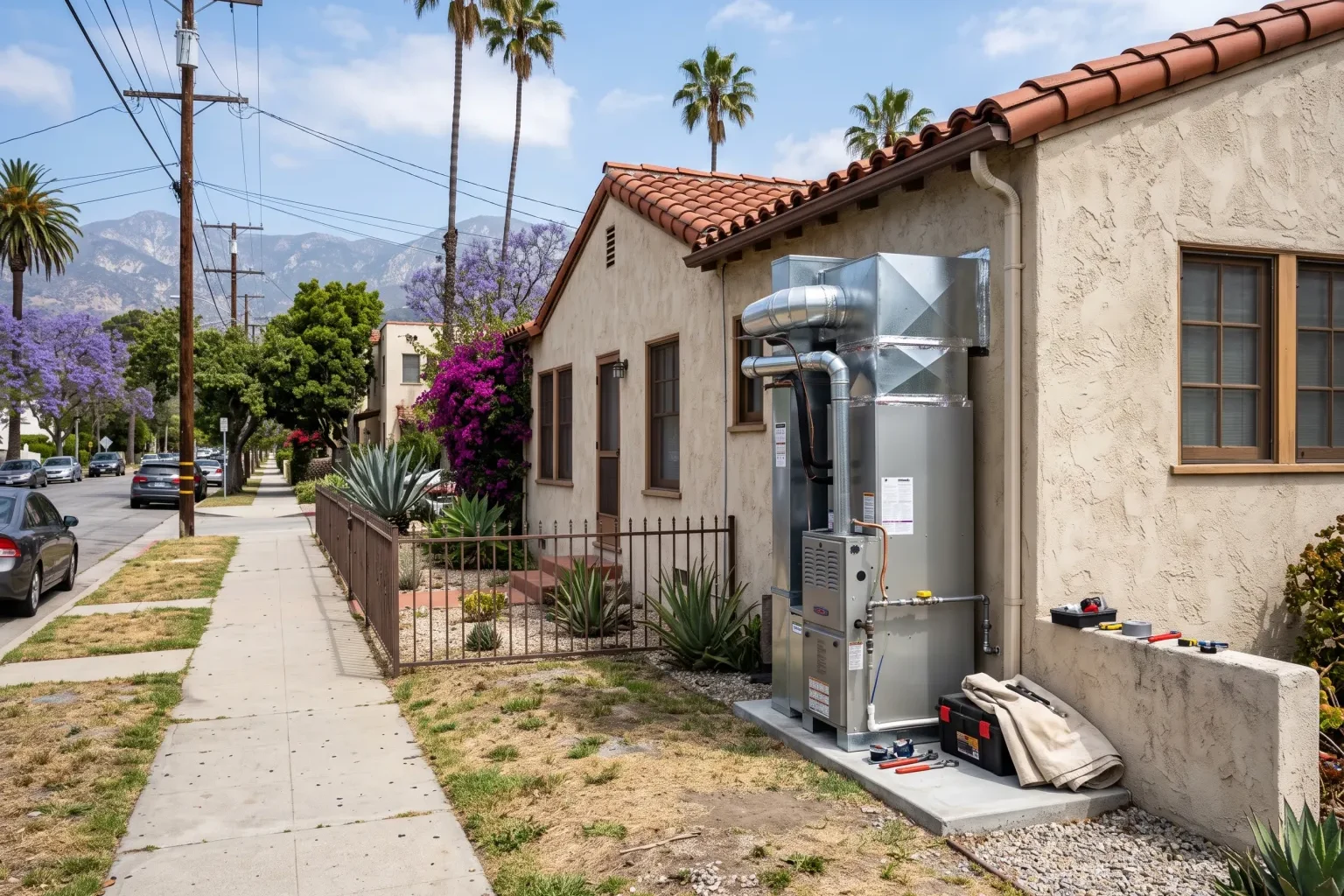
The short answer
We repair gas furnaces, heat pumps, wall heaters, floor furnaces, and ductless systems throughout the Pasadena area. A technician finds the real cause, explains it, and gives repair or replacement options before starting work.
Homes in and around Pasadena were built over a long stretch of time, and their heating equipment shows it. A Craftsman cottage might still rely on a floor furnace set into the hallway. A postwar ranch may have a wall heater in the living room plus a forced-air unit added later. Newer houses and remodels often run on heat pumps or ductless systems. SummitAir HVAC Contractors repairs all of these, so you do not have to figure out what kind of specialist to call before getting help. Heating trouble here tends to show up in bursts, usually on the first cold evenings of late fall or during a winter cold snap, and a quick, accurate diagnosis keeps a minor fault from turning into a long wait for warmth. This page explains the heating systems we service, the signs that call for a repair, how our technicians track down the cause, the thinking behind repair versus replacement, what moves the cost, and the flow of a typical service call.
Heating Systems We Work On
Each type of heater fails in its own ways, and knowing the equipment speeds up the diagnosis. Our technicians regularly service:
- Forced-air gas furnaces in attics, garages, closets, and crawlspaces
- Ducted heat pumps that provide both heating and cooling
- Ductless mini-split heat pumps with one or more indoor heads
- Gas wall heaters, common in older bungalows and apartments
- Floor furnaces found in many vintage homes
- Thermostats, zoning controls, and the wiring that links them
Signs Your Heat Needs Attention
Because heaters sit unused for much of the year in Southern California, problems often hide until the moment you need warmth. Look out for a system that will not turn on, runs constantly without bringing the house up to temperature, or switches on and off every few minutes. Uneven heat from room to room, a heat pump that blows lukewarm air, or an outdoor unit caked in frost that never clears are also signals.
Unusual sounds and smells matter too. Clanking, screeching, or a loud bang at ignition should be checked. So should a persistent burning smell, a musty odor from the vents, or any hint of gas. If you smell gas, leave the home and call your gas utility from outside before anything else. If a carbon monoxide alarm goes off, get everyone outdoors and do not restart the heater until it has been inspected.
How Our Technicians Pinpoint the Problem
A good repair starts with listening. We ask when the problem began, what it sounds or smells like, and whether anything changed recently, such as a new thermostat or remodeling work. Then we confirm the symptom ourselves.
For gas equipment, we follow the ignition sequence and test the igniter or pilot, flame sensor or thermocouple, gas valve, and safety limits. We check combustion venting and look for signs of overheating. Floor furnaces and wall heaters get extra attention to clearances and the condition of the burner and grille, since furniture and rugs often end up too close over the years.
For heat pumps, we verify the reversing valve shifts properly, check the defrost board and sensors, measure refrigerant pressures, and inspect the outdoor coil and fan. On any ducted system, we look at the filter, blower, and the return air path, because restricted airflow causes a surprising share of heating complaints.
Repairing Versus Replacing a Heater
We repair whenever a repair makes practical sense. A thermocouple, igniter, capacitor, or fan motor is a normal fix, and so is clearing a blocked condensate line or recalibrating a thermostat.
Replacement becomes reasonable when a heat exchanger or combustion chamber is cracked, when an old floor furnace or wall heater can no longer be serviced safely, or when a heat pump compressor fails on aging equipment. For those planning a new gas furnace, South Coast AQMD Rule 1111 limits NOx emissions from natural-gas fan-type central furnaces sold and installed in the Los Angeles region, and the district has been revising it toward zero-emission requirements, so the current rule should be checked first. If a heat pump is the direction, rebates depend on whether LADWP or Southern California Edison serves your address, and we confirm the current offer before quoting it.
What Affects Heating Repair Costs
The final figure on a heating repair depends on several factors:
- The type of system and how common its parts are
- Which component has failed and the labor needed to replace it
- Where the equipment sits, for example a floor furnace beneath the house or an attic unit
- Related issues found during the inspection, such as damaged venting or duct leaks
- Whether the visit takes place during regular hours or after them
A Typical Service Call
When you reach out, we gather basic details about your heater and the problem, then schedule a time. The technician arrives prepared for the type of system you described and begins with a conversation and a visual check.
After testing, you hear exactly what is wrong and what the options are. Once you approve, we make the repair, frequently during the same visit if the part is available. We then run the system long enough to confirm steady, safe heat, and we suggest any simple steps that can help avoid the same issue next season.
Heating Repair by city
- Heating Repair in San Marino
- Heating Repair in South Pasadena
- Heating Repair in San Gabriel
- Heating Repair in Alhambra
- Heating Repair in Sierra Madre
- Heating Repair in Temple City
- Heating Repair in Arcadia
- Heating Repair in Rosemead
- Heating Repair in La Cañada Flintridge
- Heating Repair in Monterey Park
- Heating Repair in Glendale
- Heating Repair in El Monte