
The short answer
A new AC in Sierra Madre should be sized from a room-by-room load calculation, not from the old unit's label or the square footage alone. We check ducts, electrical capacity and outdoor unit placement before recommending equipment, then install and commission the system in one planned visit.
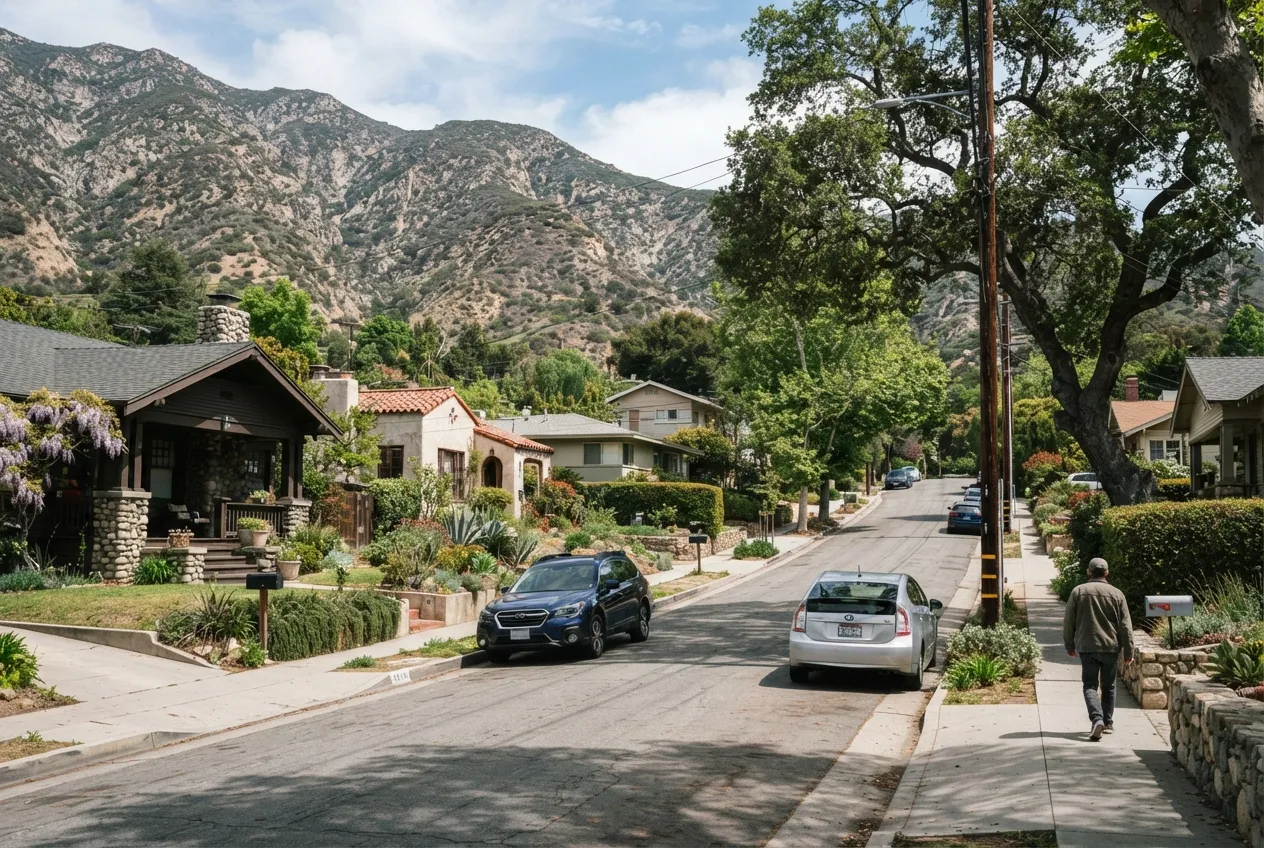
Sierra Madre sits right against the foothills, roughly five miles east of our Pasadena shop, and a new air conditioner here has to cope with summer afternoons that climb well past what coastal Los Angeles sees. Many houses in 91024 were built long before central cooling was common, so a new system often means planning a route for ductwork, finding a sensible spot for the outdoor unit on a narrow or sloped lot, and checking that the electrical panel can carry the load. SummitAir HVAC Contractors handles the whole job: sizing the equipment to the house, laying out supply and return air, setting the condenser, and starting the system up with you present so you know how it should sound and feel.
Why foothill homes need a careful load calculation
Inland valleys in the Los Angeles area run much hotter in summer than neighborhoods near the ocean, and the fall Santa Ana winds can push a hot, dry spell well into October. A house tucked under the mountains may also get afternoon sun from the west long after the street below has cooled. Those conditions tempt people to buy the biggest unit they can fit. Oversizing backfires: a unit that is too large cools the air quickly, shuts off, and never runs long enough to pull moisture out or even out the temperature between rooms.
We measure each room, note window sizes and which way they face, look at attic insulation, and account for shade from trees and the slope of the lot. The result tells us how much cooling the house actually needs, which drives the equipment size, the airflow per room and the duct sizes that follow.
Choosing the right type of system for your house
Not every Sierra Madre home suits the same equipment. A house with an existing forced-air furnace and reasonable attic space usually takes a split system: a condenser outside and an evaporator coil paired with the furnace indoors. A cottage with no ducts and a shallow attic might be better served by ductless mini-split heads in the rooms that matter most. Some owners also ask us to compare a heat pump, which cools in summer and heats in winter from the same outdoor unit.
- Split system with coil on the furnace: works when ducts are present or can be added through the attic or crawlspace.
- Ductless mini-split: fits additions, converted garages, and homes where running ducts would mean opening finished ceilings.
- Packaged unit: an option when there is no room inside for a furnace and coil, though placement on smaller lots takes planning.
- Heat pump: replaces both cooling and gas heating in one piece of equipment; we explain the trade-offs before you decide.
Ducts, electrical and placement on hillside lots
In older homes, the ductwork in the attic is often the weak link. Flexible duct that has sagged, crushed or come loose at the boots will waste cooled air into a hot attic, no matter how efficient the new condenser is. Before installation we inspect what is there, test for obvious leaks, and tell you plainly whether the existing ducts can be resealed or need to be replaced in sections.
Electrical capacity is the second check. Adding central air to a house that never had it can require a dedicated circuit and sometimes a panel upgrade; we look at the panel early so that surprise does not land on installation day. Outdoor unit placement matters too. On a sloped or tight lot we look for a level pad with clear airflow on all sides, away from bedroom windows, and positioned so leaves and debris from nearby trees are less likely to pack the coil.
What installation day looks like
Most replacements of an existing system take a single working day; a first-time central air installation with new ducts usually takes longer, and we give you a realistic schedule up front. We protect floors along the work path, recover refrigerant from any old equipment, and haul away what we remove.
Once everything is connected, we pull a vacuum on the refrigerant lines, charge the system to the manufacturer's specification, and measure airflow and temperature drop across the coil. Then we walk you through the thermostat, show you where the filter lives and how often to change it, and point out the condensate drain so you know what to watch for.
Filtration for smoke season
Living close to the mountains means wildfire smoke can drift into town during dry months. A new system is a good moment to upgrade the filter rack so it accepts a deeper, higher-efficiency media filter without choking airflow. We size the return and filter so the blower is not straining, which keeps the system quieter and helps it clean the air while it cools.
Utility rebates and permits
Sierra Madre is outside the City of Los Angeles, and many homes outside the city are served by Southern California Edison rather than LADWP. Which equipment rebates apply depends on the utility that serves your address, so we confirm the current offer before we quote it rather than promising a number. We also pull the required permit for the installation and schedule the inspection, so the paperwork matches the work. Nearby, we install systems in Arcadia, Temple City, San Marino, San Gabriel and El Monte as well.
More services in Sierra Madre
- AC Repair in Sierra Madre
- Heating Repair in Sierra Madre
- Heat Pump Installation in Sierra Madre
- Furnace Repair in Sierra Madre